Pin Drop vs Geopointe

Salesforce-native mapping or an independent location-based system?
Geopointe extends Salesforce with mapping, routing and territory tools. Pin Drop takes a different approach, building operational structure around the physical location itself. For teams that manage territories, visits and projects across the real world, the architectural difference matters.

Location as the system

Every account, site or asset lives as a structured location, not just a CRM record.

Work builds at the place

Tasks, visits and notes accumulate over time at the physical site.

Territories with accountability

Define ownership geographically and measure coverage clearly.

Pipelines connected to the ground

Project progress stays tied to where the work actually happens.

When mapping lives inside CRM, operations can become constrained

Geopointe is designed to enhance Salesforce by adding mapping, routing and territory visualisation directly within the CRM environment. For organisations deeply embedded in Salesforce workflows, this integration can improve geographic visibility and sales coordination.

However, when mapping and operational structure are dependent on CRM architecture, flexibility can become limited. Field teams may need visibility that extends beyond sales opportunity tracking. Service visits, audits, compliance checks and long-term site history often require a structure that is not confined to account records.

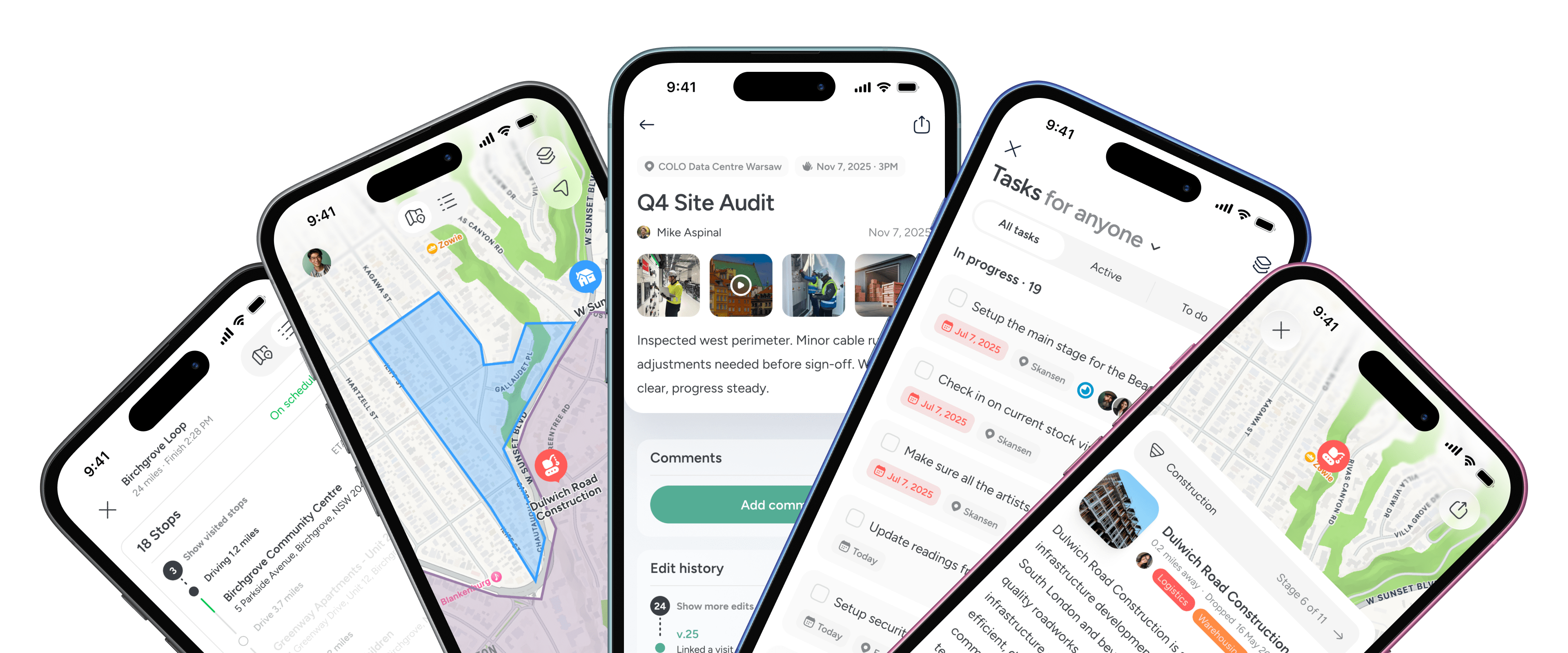
Pin Drop takes a location-first approach. Instead of layering geography onto CRM data, it centres the system around the real-world place itself. Every visit, task and project builds structured context at that location, creating a shared operational record that can exist independently or alongside CRM systems.

This distinction becomes increasingly important for organisations managing:

  • Mixed sales and service teams
  • Territory ownership across regions
  • Long-term site-based projects
  • Operational compliance and audit history
  • Expansion into new geographic markets

By separating geographic structure from CRM dependency, Pin Drop allows field operations to scale without being limited by how account records are structured.

For teams seeking operational clarity beyond Salesforce mapping extensions, this architectural shift can simplify visibility and improve long-term control.

Capability

Pin Drop

Geopointe

Best suited for
Pin Drop
Location-based operational teams managing territories, visits and projects
Geopointe
Salesforce-centric organisations enhancing CRM with mapping
Core philosophy
Pin Drop
Location as the system of record. Work accumulates at the place
Geopointe
Geographic visualisation layered on top of Salesforce account data
CRM dependency
Pin Drop
Operates independently or alongside CRM platforms
Geopointe
Built natively within Salesforce
Territory management
Pin Drop
Custom-drawn territories with named owners and coverage analysis
Geopointe
Territory management integrated within Salesforce objects
Visit logging
Pin Drop
Structured visit history tied directly to location
Geopointe
Activity typically logged within Salesforce workflows
Project pipelines
Pin Drop
Native pipelines connected to physical sites
Geopointe
Opportunity stages managed within Salesforce
Pin Drop
Multi-stop route planning with navigation handoff
Geopointe
Route planning integrated with Salesforce accounts
How Pin Drop works

A different architectural approach to field visibility

Both visualise geography. Pin Drop structures operations around the place itself.
Shared operational map
Attach work to real locations
Define and manage territories
Operate beyond CRM constraints
BEST OF 2013
& Editors Choice
Rated 4.7/5
Based on 1.4k+ ratings
FEATURED APP
162 App Stores
Compare plans
Beyond CRM-based mapping

Structure that scales across teams and territories

As field operations expand beyond pure sales activity, teams need visibility that is not confined to CRM records. Organisations use Pin Drop to create structured, location-based operational clarity that supports sales, service and project teams alike.
“Territory ownership is clear. Engineers know what is theirs and managers can see coverage instantly.”
Sophie Bennett
Head of Field Services
"We were using spreadsheets, screenshots and WhatsApp chats to keep track of customer sites. Pin Drop changed everything. Now we plan our days faster and spend less time fixing mistakes."
Mike
Regional Sales Manager
“Having property data tied to location gives us better strategic insight across regions.”
Amara Singh
Acquisitions Lead
Guided walkthrough

A closer look at how teams work together with Pin Drop

Take a short walkthrough of how teams keep track of work across locations, without spreadsheets or scattered tools.

FAQs

Is Pin Drop a replacement for Salesforce?
Does Pin Drop integrate with Salesforce?
Can I import Salesforce account data?
Does Pin Drop provide routing and optimisation?
How is Pin Drop different from Salesforce mapping tools?
Start a free trial