

Pin Drop vs Zuper

Work orders vs geographic structure
Zuper organises service jobs. Pin Drop organises territory and place.

Dispatch workflows vs territory ownership
Scheduling matters. Defined geographic responsibility matters too.

Asset service records vs site history
Service logs track equipment. Location records build long-term context.

Field coordination vs operational visibility
Dispatch systems manage activity. Location systems structure geography.
When dispatch does not define territory
Zuper is a field service management platform designed to coordinate technicians, manage work orders and support dispatch workflows. It enables organisations to track job completion, schedule service activity and manage operational throughput.
For businesses whose primary challenge is coordinating service execution, dispatch-first platforms provide structured job oversight.
However, many distributed field teams operate across defined territories and long-term customer networks. Their challenge extends beyond job scheduling. They require structured geographic clarity, explicit territory ownership and persistent site history that accumulates over time.
When operational visibility is centred primarily on work orders, geographic structure can become secondary. Territories may exist conceptually but not as clearly defined operational layers. Long-term location insight may be fragmented across completed job records.
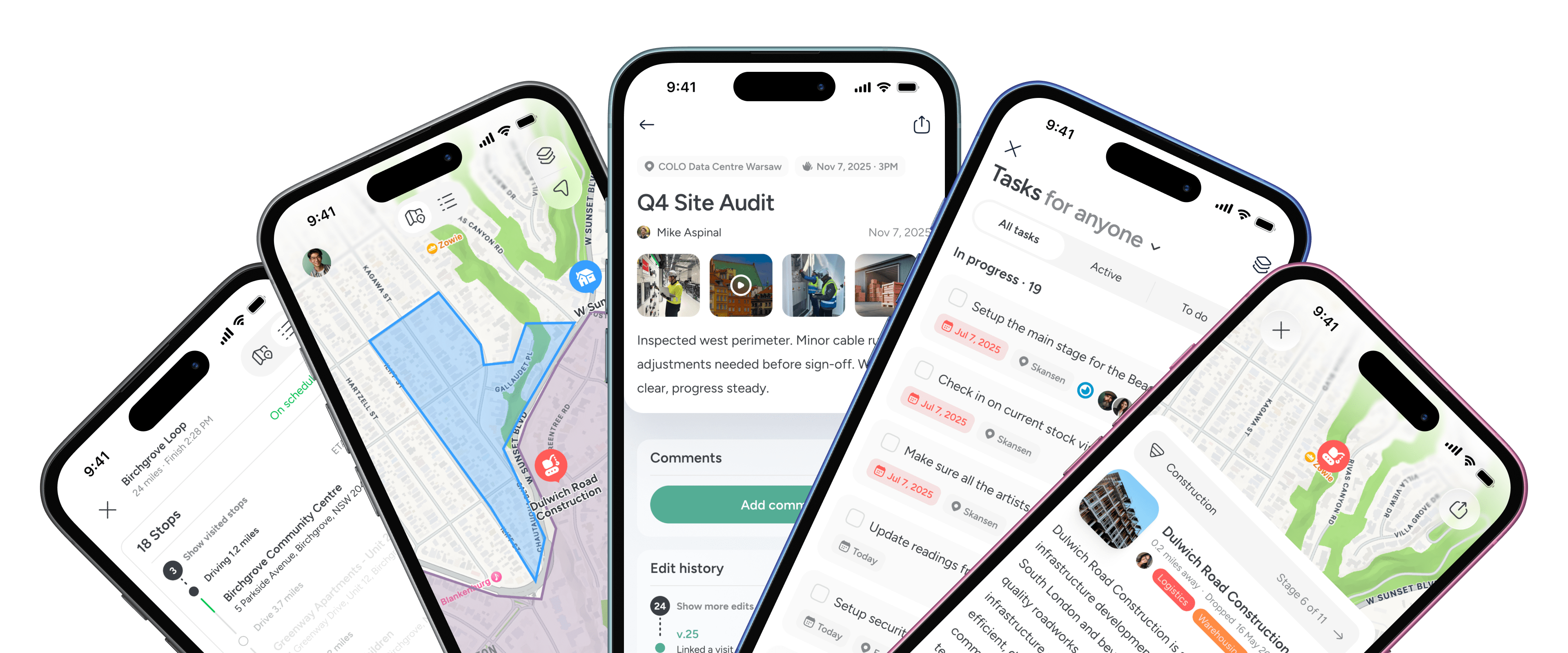
Pin Drop approaches field operations from the location outward. Each site becomes a persistent operational record. Visits, notes and tasks accumulate against that place. Territories are drawn and assigned explicitly. Routing happens within a defined geographic framework.
Many organisations continue using dispatch platforms while adopting Pin Drop to define territory ownership and maintain long-term oversight across regions.
The architectural distinction is clear: work-order centric coordination versus place-based operational clarity.
Capability
Pin Drop
Zuper
Different foundations for field operations


Geographic clarity for distributed field teams







A closer look at how teams work together with Pin Drop
FAQs


